Agent Orange – Guam, American Samoa & Johnston Island

Challenging the VA’s Refusal to Recognize Presumptive Herbicide Exposure

For decades, veterans stationed on Guam, American Samoa, and Johnston Island have reported exposure to herbicides containing dioxin (TCDD), including Agent Orange and related compounds.

Military-Veterans Advocacy petitioned the Department of Veterans Affairs to formally recognize presumptive exposure for these veterans. When VA denied that request, MVA filed suit in the United States Court of Appeals for the Federal Circuit.

This litigation seeks to ensure that veterans exposed outside the territorial boundaries of Vietnam are not denied the benefits Congress intended them to receive.

Background

The Agent Orange Act of 1991 provides a presumption of exposure for veterans who served in the Republic of Vietnam and were exposed to herbicide agents containing dioxin (TCDD) or 2,4-D.

However, evidence shows that:

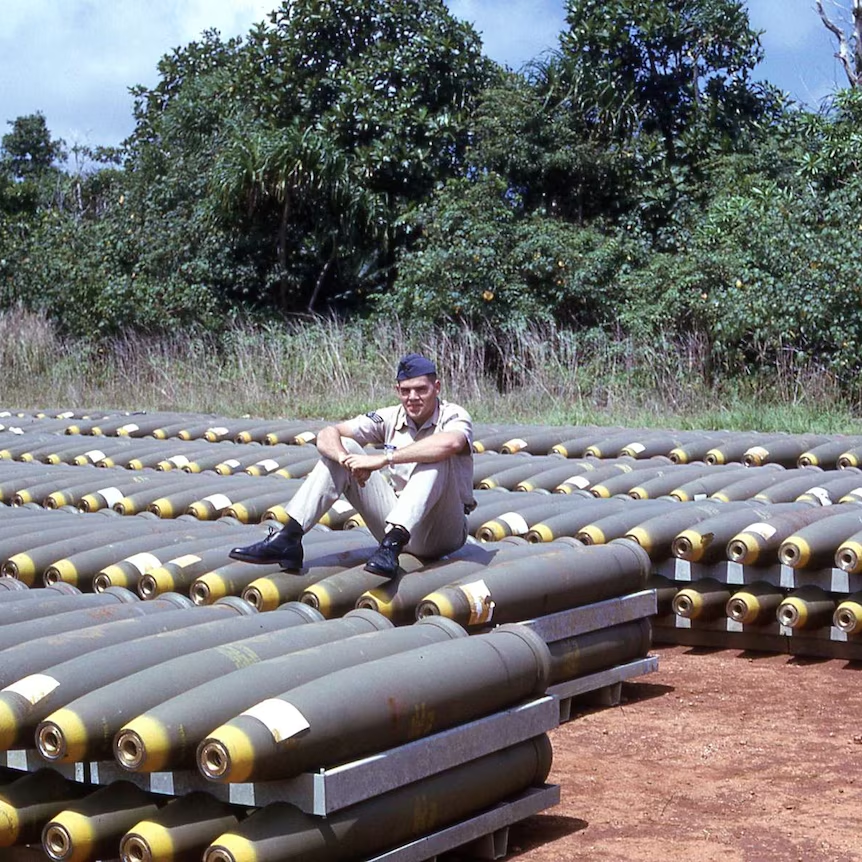
  • Herbicides containing TCDD were stored on Guam and Johnston Island.
  • Soil sampling confirmed the presence of 2,3,7,8-TCDD in concentrations far exceeding acceptable levels.
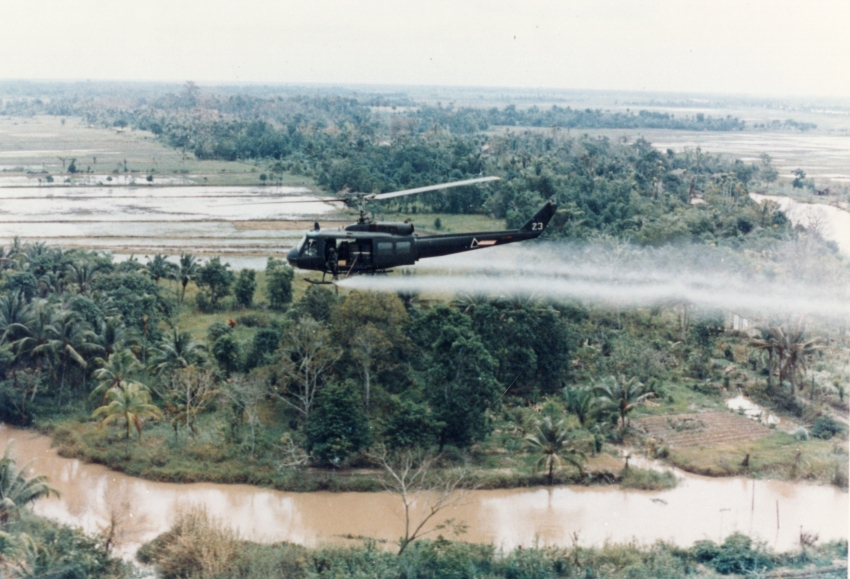
  • Commercial herbicides used in support of Vietnam operations contained the same chemical components covered by the statute.
  • Veterans stationed on these territories performed duties directly supporting operations in Vietnam.

Despite this, VA refused to extend the presumption.
Scientific & Government Evidence

Government Accountability Office (GAO)

In November 2018, GAO issued Report GAO-19-24, titled:

“Agent Orange: Actions Needed to Improve Accuracy and Communication of Information on Testing and Storage Locations.”

The report found:

  • At least one vessel carrying Agent Orange stopped at Guam.
  • Recordkeeping regarding testing and storage sites was deficient.
  • Herbicide components including 2,4-D and 2,4,5-T were present in Guam.
  • Dioxin (TCDD) has a long environmental persistence.

Soil & Environmental Testing

Independent and federal reports confirmed:

  • TCDD concentrations in Guam soil reaching up to 19,000 ppm at Andersen Air Force Base fire training areas (Guam Report)
  • Confirmed presence of 2,4-D and 2,4,5-T in soil sampling.
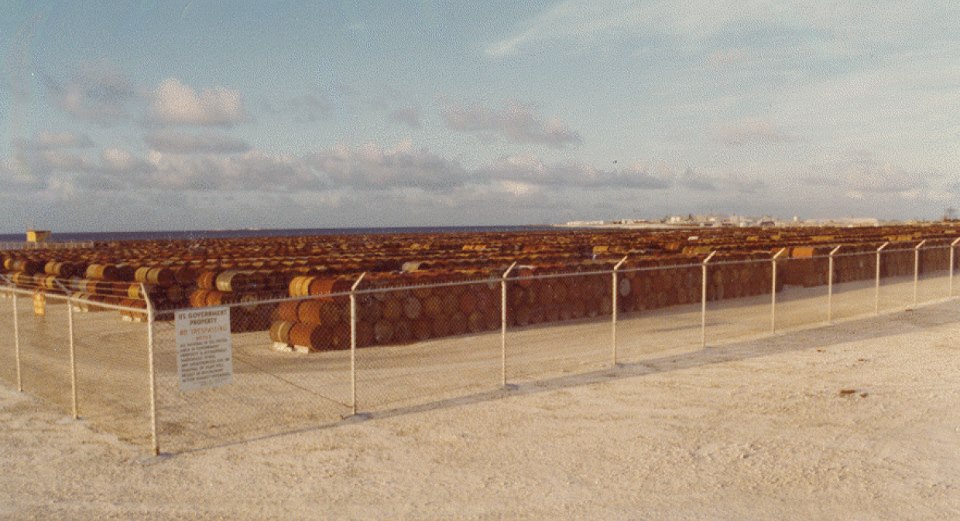
  • Storage of tens of thousands of leaking herbicide drums on Johnston Island.
  • Widespread environmental contamination in multiple landfill sites.

These findings contradict VA’s claim that tactical herbicides were not present.

Petition for Rulemaking

On December 3, 2018, MVA formally petitioned the Secretary of Veterans Affairs under 5 U.S.C. § 553(e) to initiate rulemaking to:

Presume exposure to herbicides for veterans who served on Guam, American Samoa, and Johnston Island.

The petition was later amplified with:

  • Expert affidavits
  • EPA soil data
  • Public health assessments
  • Historical documentation of herbicide use

When VA denied the petition, MVA sought judicial review.

MVA filed a Petition for Review in the United States Court of Appeals for the Federal Circuit pursuant to 38 U.S.C. § 502.

The litigation challenged VA’s denial as:

  • Contrary to the plain language of the Agent Orange Act
  • Arbitrary and capricious under 5 U.S.C. § 706
  • Unsupported by substantial evidence
  • Inconsistent with the pro-veteran canon of statutory construction

Core Legal Arguments

1. Misinterpretation of the Agent Orange Act

VA imposed a distinction between “tactical” and “commercial” herbicides not found in the statute.

The Act defines “herbicide agent” as a chemical used in support of military operations in Vietnam — not limited to tactical formulations.

MVA argued that VA’s interpretation was contrary to law.

2. Arbitrary & Capricious Decision-Making

VA conceded:

  • Presence of 2,4-D and 2,4,5-T in soil.
  • Storage of herbicide drums on Johnston Island.
  • Use of commercial herbicides containing covered chemicals.

Yet denied rulemaking based on lack of shipping documentation — despite known record destruction protocols.

MVA argued this decision violated the Administrative Procedure Act.

3. Failure to Apply the Pro-Veteran Canon

Federal courts have repeatedly held that veterans’ benefit statutes must be interpreted liberally in favor of veterans.

MVA argued that any ambiguity must be resolved in the veteran’s favor.

Why This Matters

Without a presumption of exposure:

Veterans must individually prove exposure decades after service — often without access to chemical records, military documentation, or preserved evidence.

A presumption ensures:

  • Equal treatment under the law
  • Access to disability compensation
  • Medical care for herbicide-related illnesses
  • Fair application of Congressional intent

Documents & Filings